
Italian Phrases
(that’ll impress the locals)
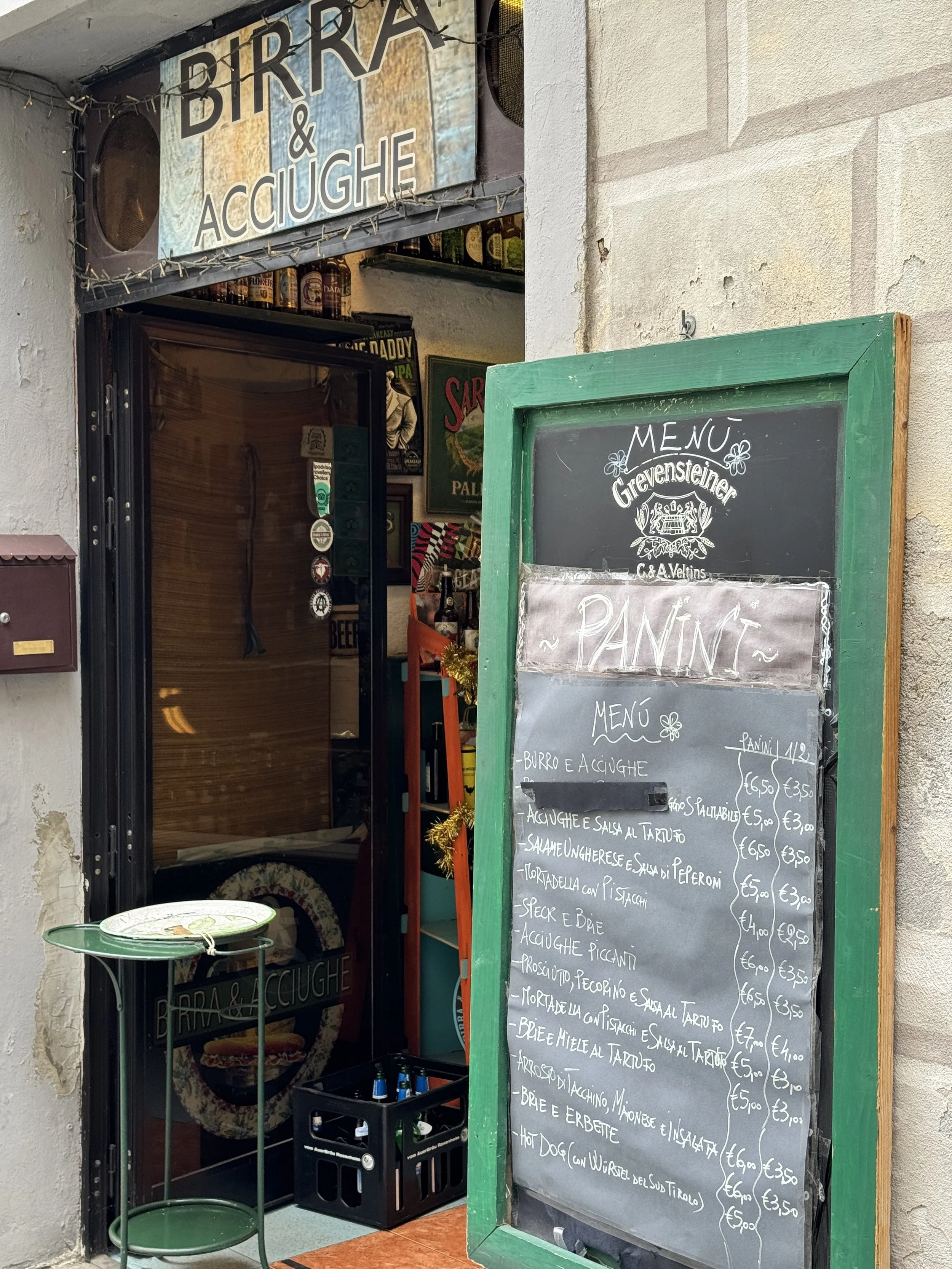
The very first time I arrived in Italy, I was armed with exactly two Italian words. Ciao. And pizza (I was only in my early 20’s, so I think all can be forgiven). And while both of those did a reasonable job, what happened when I actually started trying to speak the language, even a little bit, was something I honestly didn't expect.
People changed. Not dramatically, not in some chick flick movie way. Just slightly.
A bit warmer.
A bit more patient.
A bit more willing to help.
One shop owner in Vicopisano spent about 10 minutes teaching me when to use Buongiorno, Buon Pomeriggio, and Buonasera at the correct time of day, and it ended up being one of my favourite conversations of the entire trip.
And that's the thing nobody tells you. You don't need to speak Italian fluently. You don't need lessons for months before you go. You just need a handful of phrases, the confidence to use them, and the willingness to look slightly silly in the process.
All three of which I, and I’m absolutely sure you have.
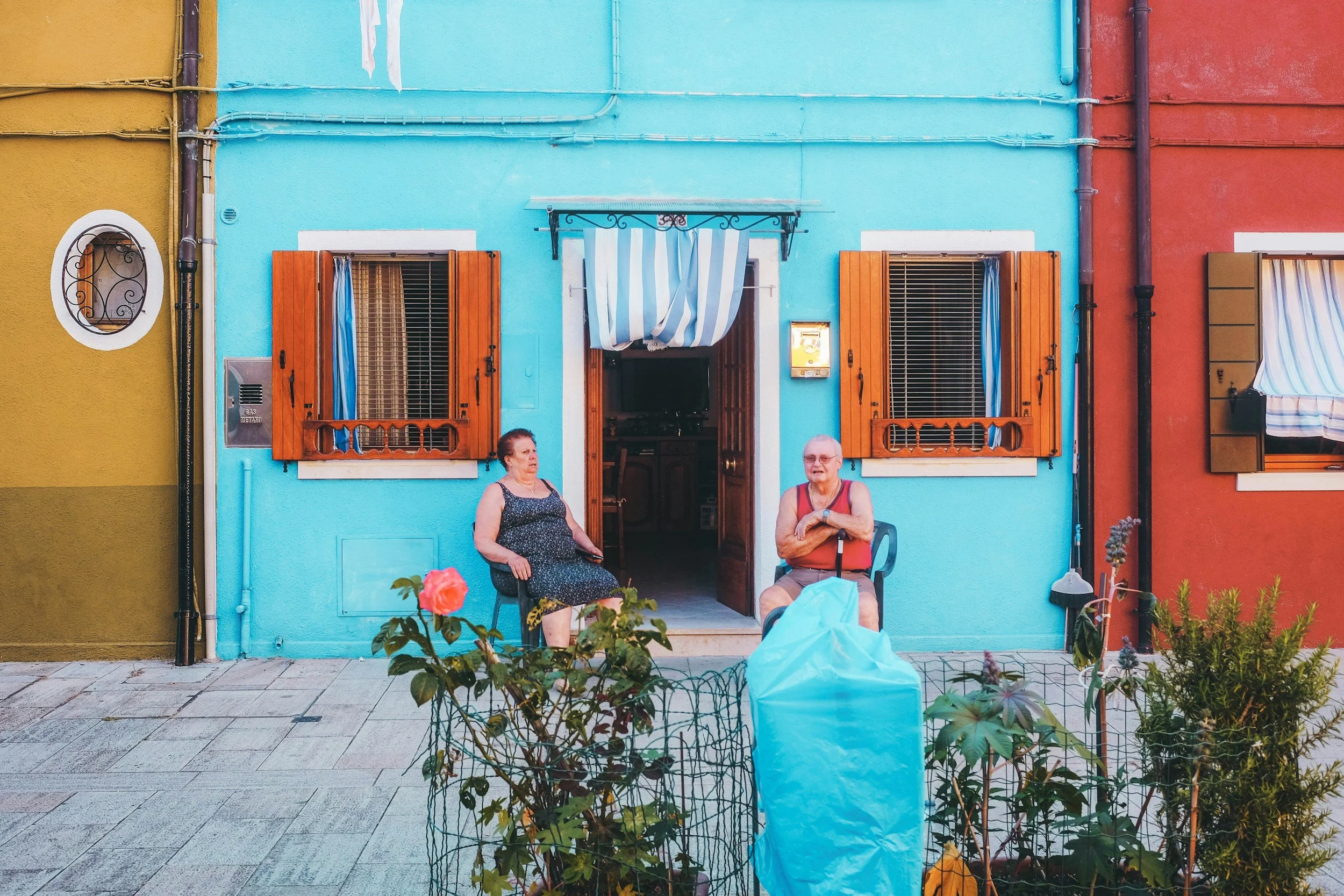
A Tiny Bit About the Language (Bear With Me, It's Interesting)
Italian is what's called a Romance language, which doesn't mean it's particularly romantic, although let’s be honest… it is; it means it evolved from Latin, the language of ancient Rome. French, Spanish, Portuguese and Romanian all come from the same roots, which is why once you have a little of any of them, you start recognising things everywhere.
What I love about Italian specifically is the sound of it. Every letter does its job. Every vowel is crisp and clear. You say exactly what you see (anyone else picture Roy Walker in their head as they read that - or just me, as I wrote it?!), almost without exception, which actually makes it more logical than English in a lot of ways.
And here's something that might surprise you. Many English words came directly from Italian. Umbrella (from ombra, shade). Balcony. Graffiti. Fiasco. Scenario. Even influenza and piano (short for pianoforte, meaning soft and loud). You already have more Italian in you than you think. Which is, honestly, a great place to start.
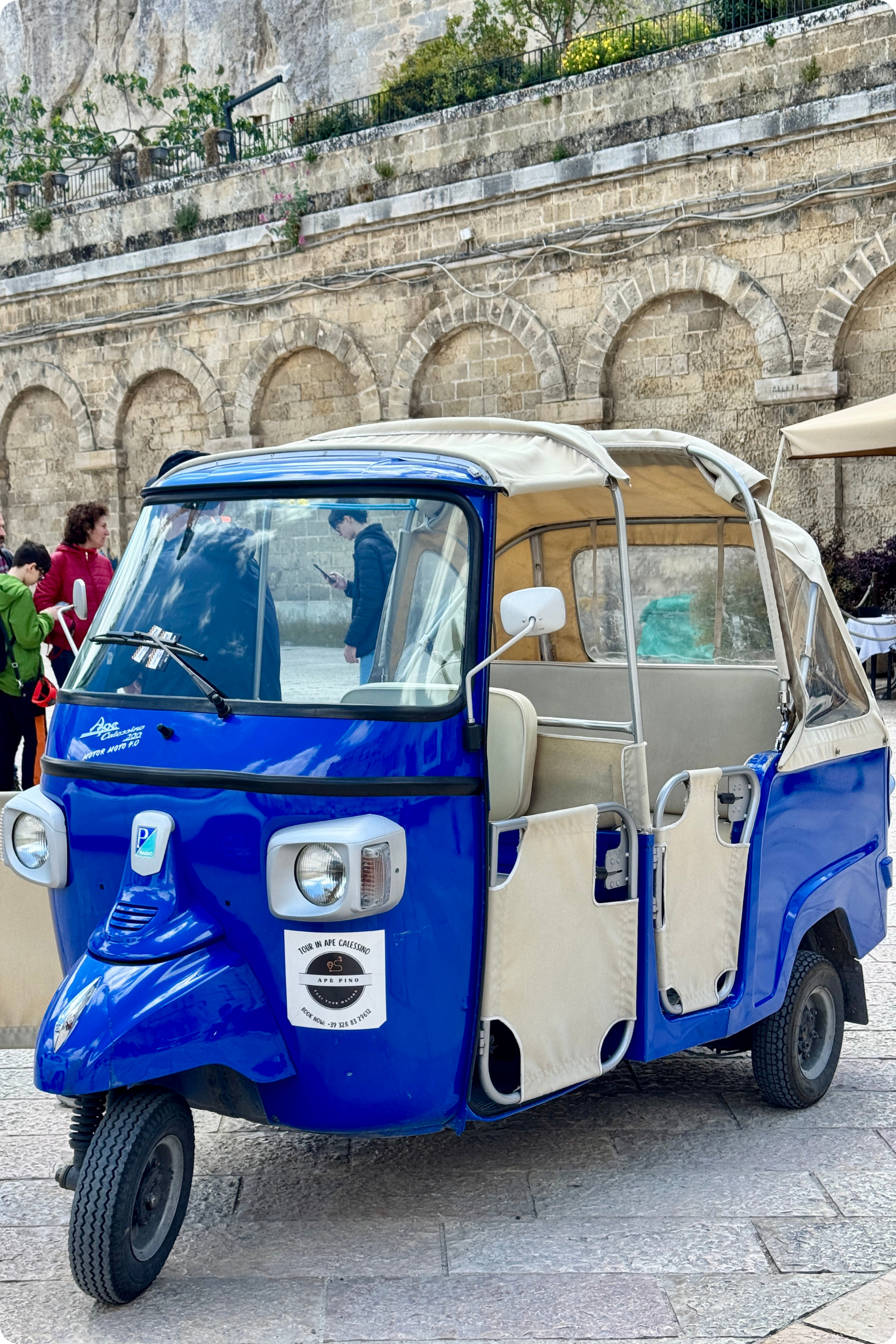
10 everyday words you might not realise are Italian:
Solo — from solo, meaning alone
Al fresco — from al fresco, meaning in the fresh air
Latte — from latte, simply meaning milk
Replica — from replicare, to repeat or fold back
Soprano — from sopra, meaning above, originally describing the highest singing voice
C
orridor — from corridore, a running place or passageway
Contraband — from contrabbando, against the ban
Arcade — from arcata, a series of arches
Magenta — named after the Battle of Magenta in northern Italy in 1859
Motto — from mottetto, a little word or phrase
How to Say the Words (Without Tying Your Tongue in a Knot)
Before we get to some helpful phrases, let me share the two things that will make everything else fall into place.
First: in Italian, every single letter is pronounced. There are no silent letters lurking about to catch you out. No 'g' that suddenly decides to be silent (gnome, anyone?).
Second: the vowels are always the same. Always. This is the bit that makes Italian so much more consistent than English once you get it.
The Italian Vowels: Memorise These and You're Most of the Way There
A always sounds like ah (as in pasta = PAH-sta, like the 'a' in 'father')
E always sounds like eh (as in prego = PREH-go)
I always sounds like ee (as in vino = VEE-no, like 'ee' in 'seen')
O always sounds like oh (as in conto = KON-to)
U always sounds like oo (as in scusi = SHOO-zee)
Two other ones worth knowing: C before e or i sounds like CH (so grazie is GRAH-tsee-eh, not gra-zee). And G before i or e makes a soft 'j' sound (so buongiorno = bwon-JOR-no, the 'gi' sounds like the 'j' in 'journal').
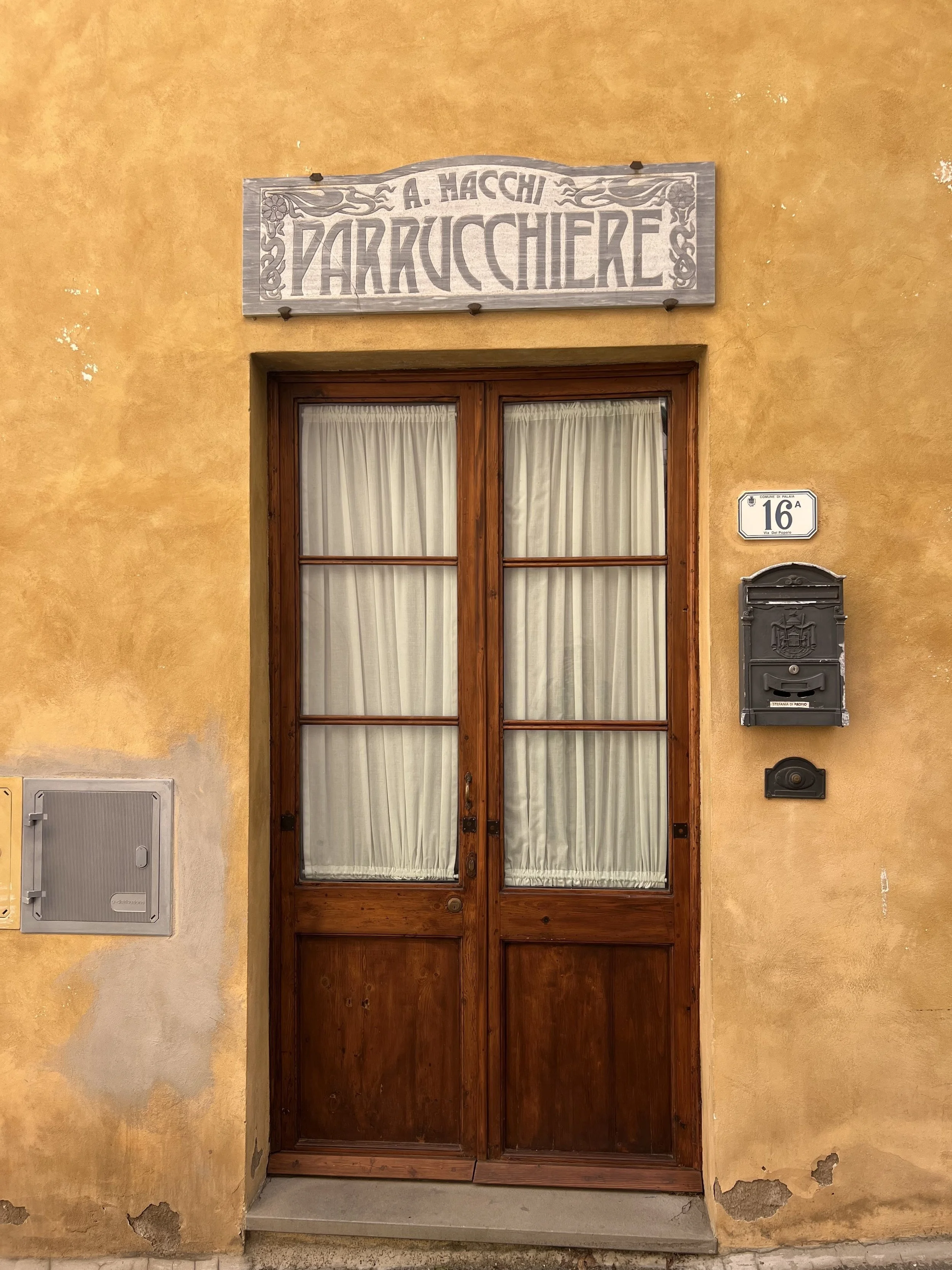
Phrases You'll Use Before You've Even Had Coffee
Every day in Italy begins the same way. You walk into a café, a shop, or past someone on the street, and the first thing you do is greet them. Not as an afterthought. Not as background noise. Actually greet them.
Buongiorno (bwon-JOR-no) is “good morning”, and you use it until early afternoon when you switch to buonasera (bwoh-nah-SEH-rah), “good evening”. These two words are used constantly. Walking into any room, acknowledging a stranger, and sitting down at a restaurant. It's a small act of recognition, and it changes the temperature of an interaction almost instantly.
Ciao (chow) is the one we all know, “bye” but it's informal. Perfect between friends or with people your own age. With someone older, or in a shop where you don't know the person, buongiorno shows more respect and will get you further.
Per favore (pehr fah-VOH-reh) and grazie (GRAH-tsee-eh) are "please" and "thank you," respectively. You cannot overuse them. And prego (PREH-go) is the reply to grazie, meaning you're welcome, but it also means please, go ahead, after you. It turns up everywhere once you start listening for it.
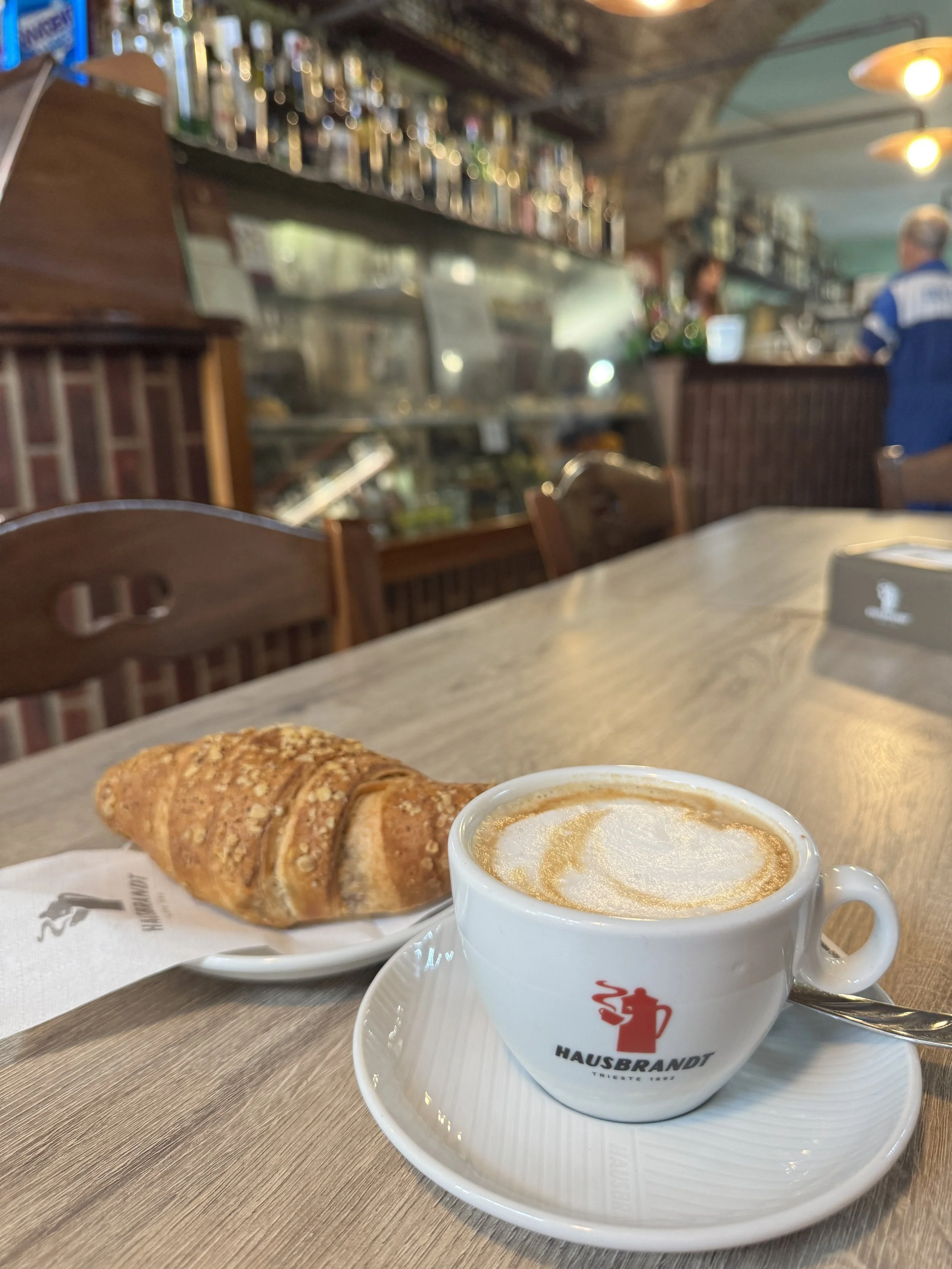
Learning how to order your morning coffee is a great place to start.
At the Café and Table, Where the Good Stuff Happens
In Italy, the café is not just somewhere you get coffee. It is where the day begins. And ordering in Italian, even just the simplest thing, makes the whole experience feel completely different.
Un caffè, per favore (oon kaf-FEH pehr fah-VOH-reh). “A coffee, please”. Four words. That's genuinely all you need to order an espresso at a bar and feel like you belong there.
Cos'è questo? (koh-ZEH KWES-to) means: “What is this?” If you are pointing at something on a menu or at a market stall that you don't recognise, asking this question in Italian rather than just blankly staring usually results in someone very enthusiastically explaining it, often bringing you a taste. Win.
È tutto buonissimo (eh TOOT-toh bwon-EES-see-moh) is “everything is delicious”. Three words that will make any Italian cook, waiter, or nonna absolutely light up. Say it and mean it. In my experience, it is almost always completely true anyway.
Il conto, per favore (il KON-to pehr fah-VOH-reh) is “the bill, please”. And it matters because no one in Italy will bring you the bill unless you ask for it. Lingering at the table is not rudeness. It is the entire point. When you're actually ready to leave, ask. Simple.
When You Need a Hand, Phrases That Get You Out of a Pickle
Even with the best preparation, there will be a moment when you're slightly lost. You're not sure what the sign means. Someone is speaking very quickly, and you have caught approximately one word in seven.
This is completely fine.
This is actually part of the fun.
Parla inglese? (PAHR-la een-GLEH-zeh) means “do you speak English?^ The key is the way you ask it. Quietly. Politely. With a slight smile. Not loudly, not at speed, not with the energy of someone who has already decided they'll be understood. Ask it this way, and you almost always get a warmer response, even if the answer is only a little.
Più lentamente, per favore (pyoo lehn-tah-MEHN-teh pehr fa-VOR-eh) means, “more slowly, please”. This is genuinely one of the most useful phrases on the entire list. Say it when someone is going too fast, and they will almost always oblige, sometimes with great theatrical slowness, which is also fine.
Non capisco (non kah-PEE-skoh) is “I don't understand”. There is no shame in this. Saying it in Italian, rather than just looking blank, is itself a form of engagement. It tells the person you are trying. They almost always try harder in return.
And un tavolo per uno, per favore (oon TAH-vo-lo pair OO-no pehr fah-VOH-reh) is “a table for one, please”. Say it clearly, with warmth, with the confidence of someone who has absolutely chosen to be dining alone and is very much looking forward to it. Because you have and you are.
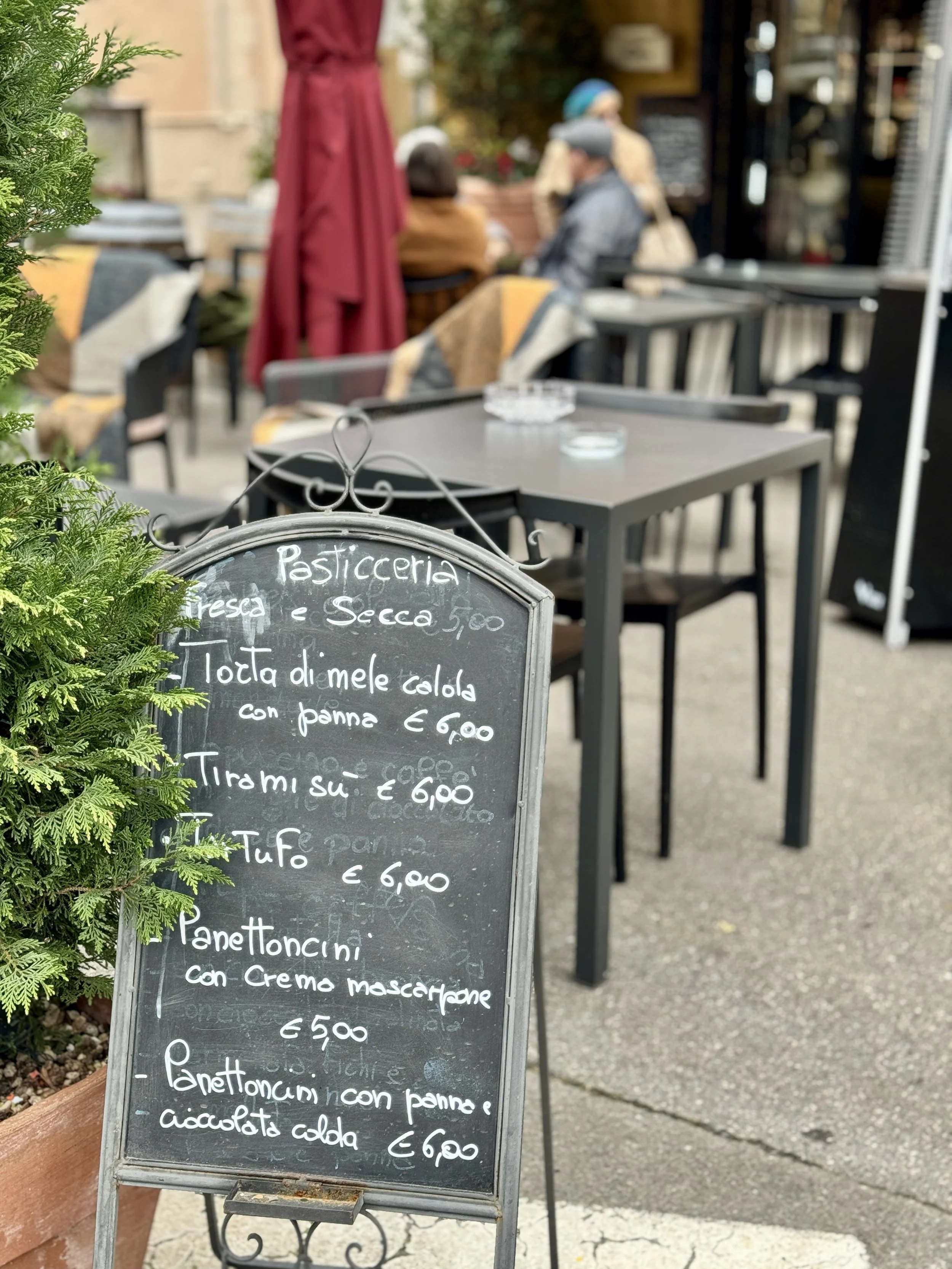
‘Un tavolo per uno per favore’
The Ones That Go Beyond Useful
There is a category above practical. Phrases that aren't strictly necessary but are so embedded in the warmth of Italian culture that using them makes a transaction a bit more memorable.
Che bello (keh BEL-loh) or che bella (keh BEL-lah) means “how beautiful”. Bello for masculine nouns, bella for feminine. But honestly, don't worry about that. Say it about a view, a town, a plate of food, a ceramic on a market stall. It works in practically every situation and requires no context whatsoever.
Mamma mia (MAH-mah MEE-ah) is more versatile than most people realise. It is not just a stereotype. It expresses surprise, delight, mild alarm, wonder, all of the above at once. At the right moment, it is completely perfect, and Italians genuinely love hearing a foreigner use it naturally (not in an over-exaggerated Super Mario way).
Salute (sah-LOO-teh) is “cheers” when glasses go up, and “bless you” when someone sneezes. One word, two uses, both feel completely right.
A presto (ah PRES-toh) means “see you soon”. I use it when I leave somewhere I'd genuinely like to return to. A restaurant that’s got the best pasta. A cafe I've been sitting in all afternoon. It's a small, quiet commitment. A way of saying this place mattered.
Then we have my favourite sentence Che bella giornata (keh BEL-lah jor-NAH-tah), meaning “what a beautiful day”! Which is most days when I’m in Italy, so I use it a LOT.
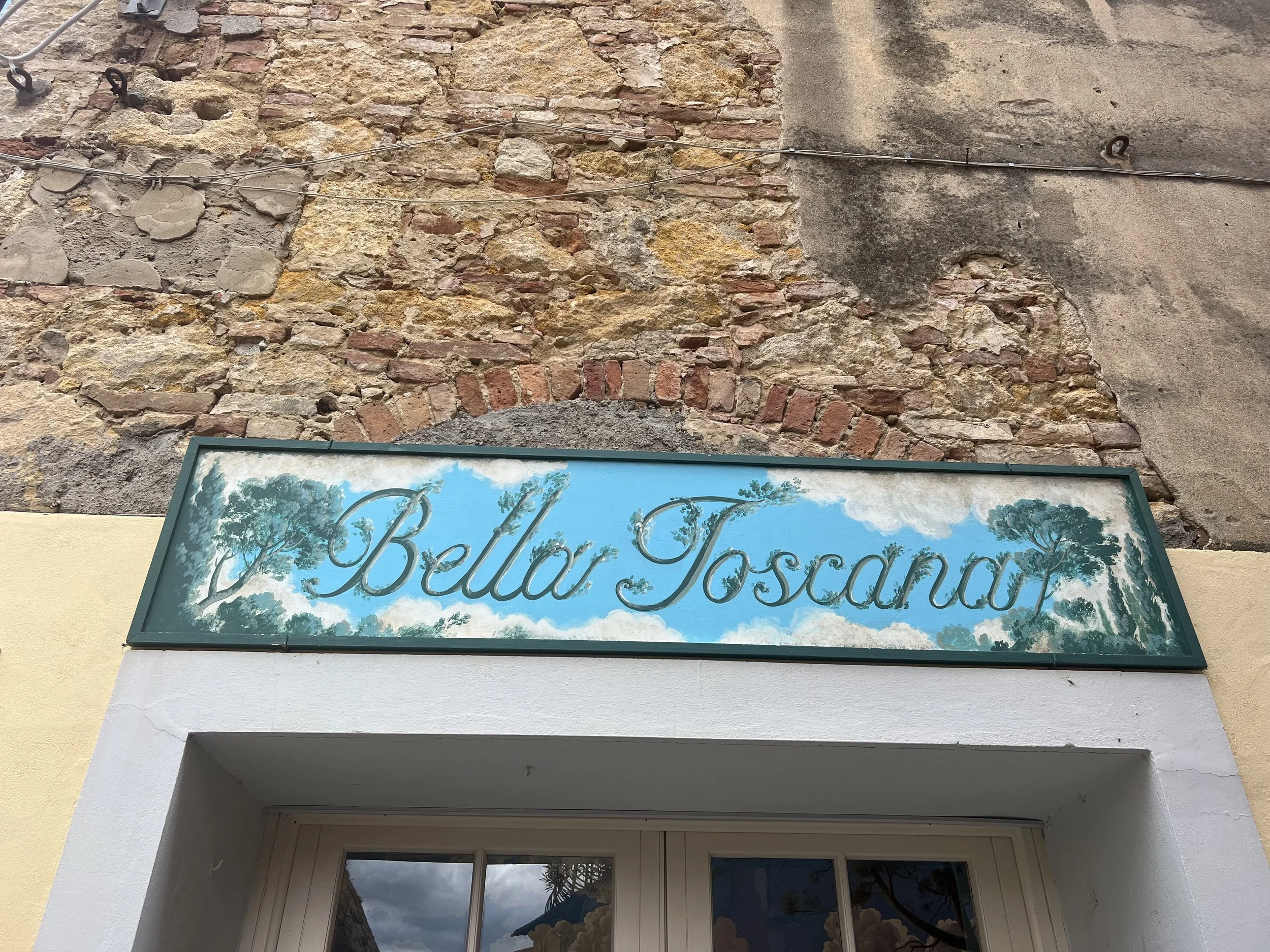
On Getting It Wrong (Which You Will, and Which Is Completely Fine)
I want to say something about confidence here, because I think it stops a lot of people from even trying.
You will mispronounce things.
You will sometimes say a word and get a blank look back.
You will occasionally use the wrong form of something or put the emphasis in entirely the wrong place.
All of this will happen.
It does not matter. At all.
What matters is the attempt. The trying. The signal you send when you start with buongiorno instead of just launching straight into English at full speed. Italians are not sitting there waiting to judge your accent. They are, in my experience, genuinely delighted when someone has a go. The warmth you get back when you try is real, and it is immediate.
If you have a tendency to feel self-conscious about this, or if the thought of getting something wrong in public makes you want to skip the whole thing, I get it.
I really do.
But I want to tell you, from experience, that those moments when it goes slightly sideways are often the best ones. The gentle correction, the laugh that happens, the conversation that comes out of it. That's the good stuff.
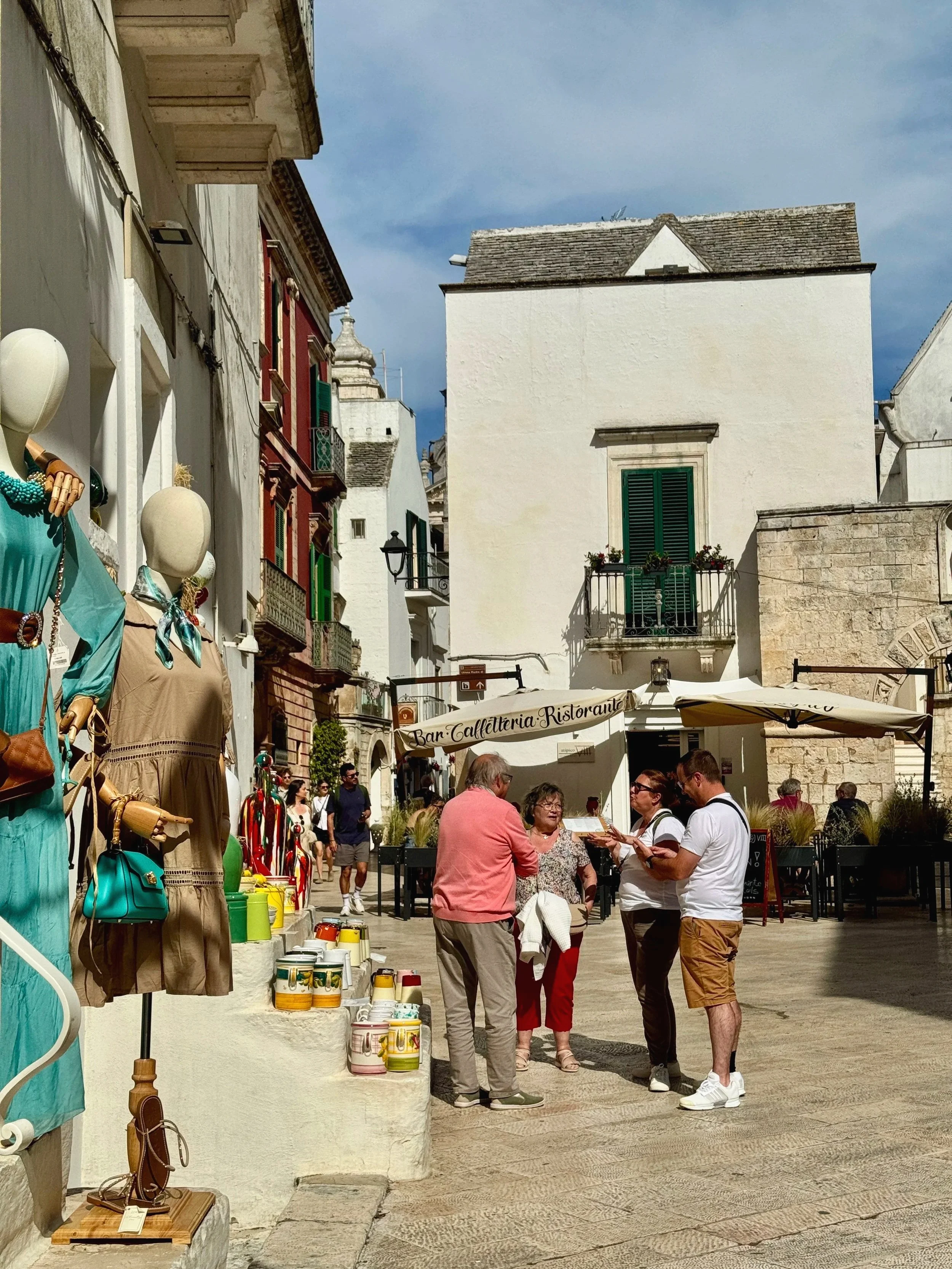
Italians love nothing more than a good natter
Learning Some Italian Before You Travel (Without It Feeling Like Homework)
You don't need months. You don't need lessons. You need about twenty minutes a day in the few weeks before you travel and the right app on your phone.
The secret is small and consistent, not big and occasional. Ten minutes on the bus, five minutes before you go to sleep, a quick session while your coffee brews. That kind of repetition is genuinely how the phrases start to stick. And once they're in there, they come out at the right moment almost without you thinking.
Duolingo is the obvious starting point, and it earns its reputation. It's free, it's gamified, and the daily streak feature is surprisingly motivating if you're someone who responds to that kind of gentle pressure. It won't make you fluent, but for building holiday confidence, it absolutely does the job. The little owl becomes oddly compelling after a few days. Just go with it.
Babbel is a step up in structure. It uses voice recognition to help with pronunciation, which, given what we've been talking about, is genuinely useful. There's a free trial and then a subscription. Worth it if you want something a bit more rigorous than the owl.
Busuu has a feature I love: you can record yourself speaking and have it corrected by actual native Italian speakers. For anyone who wants to practice saying the words out loud, rather than just reading them, this is a brilliant option.
Google Translate in your pocket is not a language teacher, but it is a very good backup. The conversation mode, where you hold the phone between you and it translates in real time, has helped me out of some genuinely stuck moments. Use it when needed. Don't rely on it instead of trying. But it is also incredibly useful in shops or restaurants when you need to translate something, so you just use the camera feature and it pops up in English (most of the time!)
Remember, you don't need to be fluent.
You just need a handful of words, the willingness to use them, and the understanding that making the effort changes something. It changes how interactions feel, how places feel, how the whole trip feels.
Italy notices when you try. It always does.
Baci,
Beara x