
Travelling to Italy in Uncertain Times: What to Expect
(and How to Adapt)
There is something about planning a trip to Italy that usually feels quite instinctive.
You picture it easily. The light, the food, the way the days seem to open up in a softer, slower rhythm. It is often one of those places that doesn’t require too much overthinking. You choose a region, find somewhere to stay, book your flights, and the rest tends to fall into place.
Lately, though, there is a little more sitting around those decisions. Not always obvious, but present in the background. Global events have a way of filtering into everyday life, shaping factors such as flight routes, fuel costs, and the overall cost of travel in Italy and beyond.
And it is often here that hesitation begins.
Not because Italy has changed.
But because everything around it has.
The important thing to hold onto is that while global events may influence how you travel to Italy from the UK, they don’t have to decide whether you go at all. With a little flexibility and a slightly different approach, the trip you had in mind is still very much within reach.
Getting to Italy from the UK
Travelling to Italy from the UK is often the simplest part of planning a trip, but it is also where global changes tend to show up first. Shifts in fuel costs and airline demand can affect both pricing and availability, particularly at smaller regional airports.
If direct routes feel limited or more expensive than expected, it usually helps to rethink where you are flying into rather than whether you go at all.
Larger cities such as Rome, Milan or Bologna tend to offer more stable and flexible flight options from the UK. From there, travelling through Italy becomes much easier than it might first seem. The train network connects these hubs to smaller towns and regions in a way that feels simple and reliable, allowing you to move through the country without needing to rely on additional flights.
For many trips, this shift does not take anything away. It simply changes how the journey begins.
For others, it opens up an entirely different way of travelling.
Reaching Italy without flying is also more possible than many expect. Taking the train from London to Paris, then continuing through France or Switzerland before crossing into Italy, creates a journey that feels gradual and connected. It is not the fastest route, but it allows you to experience the transition between places rather than skipping over it.
Ferry routes offer another option, particularly when combined with rail travel across France. They are not always the most direct, but they can turn the process of getting there into part of the experience itself.
There is something in this that reflects an older way of travelling. The Grand Tours of the 17th to 19th centuries were built around slow movement across Europe, often with Italy as the final destination. While modern trips are shorter, that same sense of journey still exists if you choose it (I really should do this for one of my future trips).
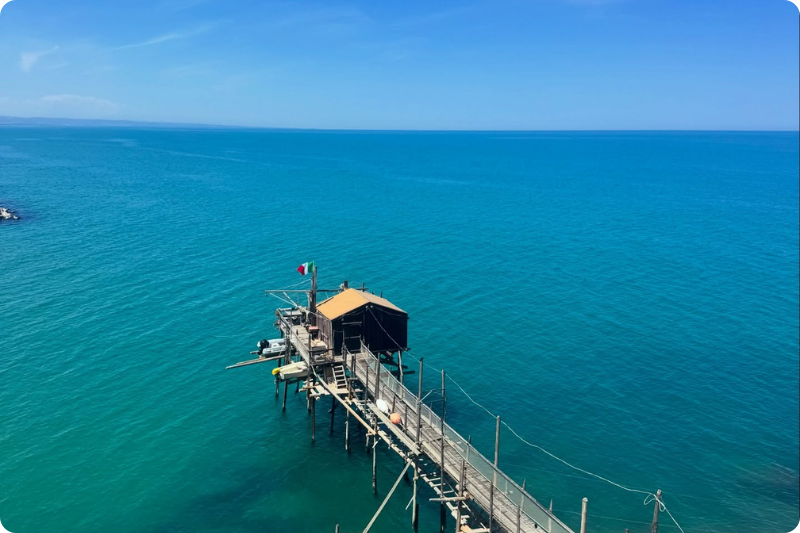
A traditional trabocco fishing platform.
Moving Around Italy
Once you are in Italy, the cost of travel continues to shape how you move between places.
If you are hiring a car, fuel prices are something to factor into your overall travel budget. Longer scenic drives, while often beautiful, can quickly increase costs, especially if you are covering long distances day after day.
That does not mean avoiding them altogether, but it does help to be more selective.
Some routes are worth taking slowly (check out my guide on travelling from Tuscany to Abruzzo over 3 weeks), where the journey itself is part of what you want to experience. Others are better approached more directly, allowing you to reach your destination without adding unnecessary time or cost. Finding that balance means you can still enjoy those quieter, scenic moments without letting them define the entire trip.
For many travellers, combining driving with public transport offers a more flexible approach. Italy’s rail network, through services like Trenitalia and Italo, is well-connected and often more cost-effective than driving longer distances. It also removes the need to think about fuel, tolls, or parking, particularly when travelling between cities.
Regional buses can also fill in the gaps, reaching smaller towns and villages where trains don’t always go.
It becomes less about choosing a single way to travel and more about using a combination that works for your route, pace, and budget.
The Cost of Food in Italy
Food is often where the cost of travel in Italy feels most noticeable, particularly if you are moving between different regions.
In central areas of cities like Florence or Rome, it is easy to find yourself paying €20–€30 for a simple pasta dish, and a full meal for two, including drinks, can quickly reach €60–€80 or more. The location plays a significant role in that, as does the dining style.
Step slightly away from those central streets, or into smaller towns, and the same meals begin to feel very different. Prices soften, the pace slows, and the experience often feels more local. Further south, in regions such as Puglia or Calabria, food becomes even more accessible, with generous, full meals often sitting between €15–€25.
But what makes Italy so adaptable is not just where you eat, but how.
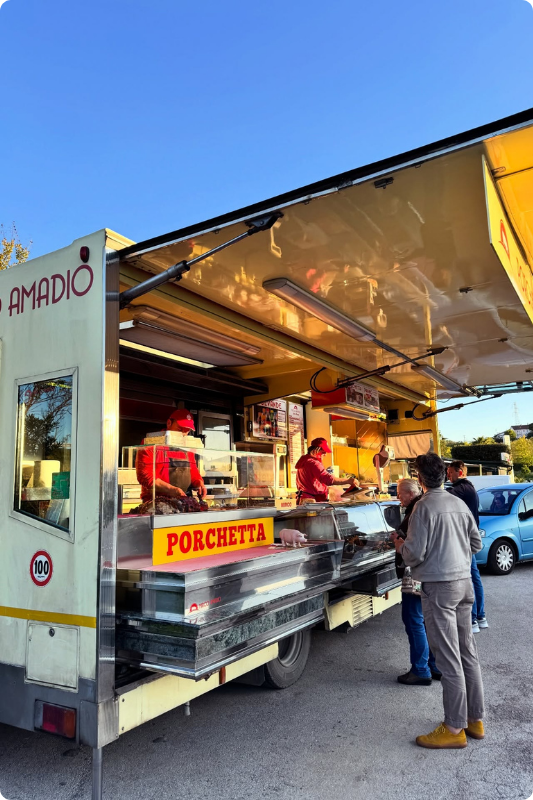
Local markets are part of that rhythm. In most towns and cities, you will find them woven into everyday life, whether that’s a weekly outdoor market or a small, permanent space filled with fresh produce. Bread still warm from the bakery, seasonal fruit, cheeses, cured meats, olives, simple ingredients that do not need much to become a meal.
If you are staying somewhere with even a small kitchenette, it’s also worth leaning into that.
Picking up a few things in the morning and putting together your own lunch before heading out for the day can be one of the easiest ways to keep your Italy travel budget under control, without it feeling like a compromise. A fresh sandwich, fruit, something to drink, perhaps a small sweet treat, all for a fraction of the cost of a restaurant, and often far more in tune with how the day naturally unfolds.
It also changes how you move through a place.
You stop at the market. You notice what is in season. You eat when it feels right, rather than when you find somewhere to sit. And in doing so, you begin to experience Italy in a way that feels less structured, but more connected.
Small choices like this shape your overall spending far more than you might expect. Sitting at the bar for a coffee or a quick lunch rather than taking a table, choosing one longer meal in the evening, and keeping the rest of the day simple all create a balance.
It’s not about spending less for the sake of it.
But about spending in a way that feels considered.
Food Budget Guide (Per Person, Per Day)
Northern Cities (e.g. Milan, Florence)
€40–€70
A mix of café breakfasts, casual lunches, and one sit-down dinner. Costs higher in central areas.
Central Regions (e.g. Tuscany, Umbria)
€35–€60
Balanced spending with access to smaller towns and local trattorias.
Southern Italy (e.g. Puglia, Calabria)
€25–€50
More affordable overall, with generous portions and lower restaurant pricing.
My top tips
Eat at the bar where you can. Coffee and pastry: €2–€3 vs €5–€7 seated.
Avoid the main tourist streets for meals. Walk just 5–10 minutes out.
Use markets for lunches. Bread, cheese, fruit, simple, fresh, and low cost.
Balance your meals. One sit-down dinner, lighter meals elsewhere.
Travel south or regionally where possible. Prices naturally reduce outside major cities.
Exploring Italy Without Overspending
By the time you arrive in Italy, you may already feel the weight of what it took to get there.
Flights might have been higher than expected. Plans adjusted. Budgets are considered more carefully than they once were. And it is easy, at that point, to feel like you need to pull back on what you do once you arrive.
But this is where Italy tends to shift that feeling quite quickly.
Because so much of what makes it special does not come with a high cost at all.
Some of the most memorable parts of a trip are often the simplest. Walking through a town in the early evening as everything begins to slow. Sitting in a square with a coffee, watching the rhythm of daily life move around you. Taking a longer walking route back, just to see where it leads (see the wonderful ruin I found on my current trip, all from taking a wrong turn).
Churches, for example, are part of everyday life across Italy, and many are free to enter. Some are small and quiet, tucked into side streets, while others are vast and filled with centuries of history and art. You do not need a ticket or a plan. You simply step inside.
Museums, too, are more accessible than many expect. Smaller, local museums often have low entry fees, and across Italy, there are designated free entry days, particularly on the first Sunday of each month for many state-run sites.
Then there is the landscape itself.
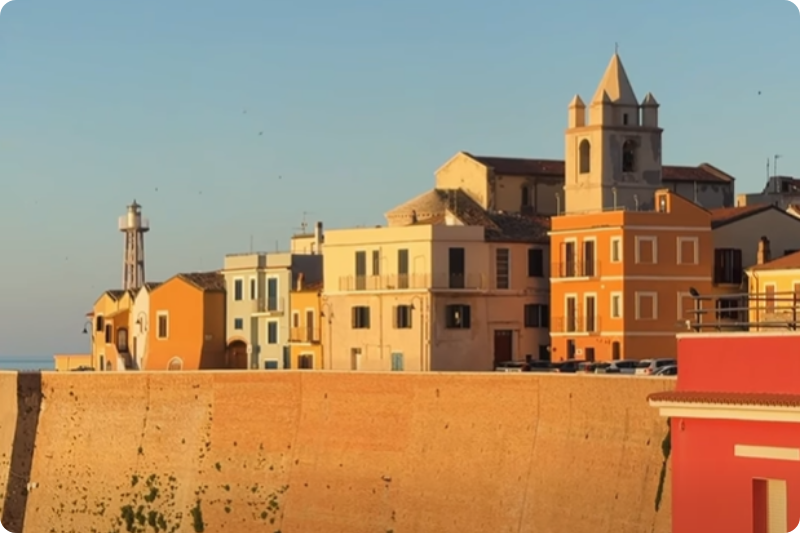
Walking trails through the countryside, coastal paths, vineyard routes, small hilltop towns, places that do not require an entrance fee, only time. Even in well-known regions like Tuscany, some of the most beautiful moments come from simply being out in it, rather than moving between paid attractions.
Local farms and producers can also offer a different kind of experience. Olive groves, vineyards, and small agricultural estates sometimes open their doors for informal visits or tastings. Some are paid, particularly for more structured experiences, but others are low-cost or simply part of buying directly from the source. A bottle of olive oil, a small tasting, a conversation, it becomes less about the cost, and more about the connection.
Even within towns and cities, there is always more available than it might first seem.
Public viewpoints. Local markets. Seasonal events. Festivals that you happen upon rather than plan for. These are the things that sit outside of a fixed itinerary, but often stay with you the longest.
And that is where the balance begins to settle.
You may have spent more getting there.
You may be travelling with a closer eye on your budget.
But once you arrive, Italy gives you space to experience it fully, without constantly needing to spend.
It becomes less about how much you do and more about how you choose to spend your time.
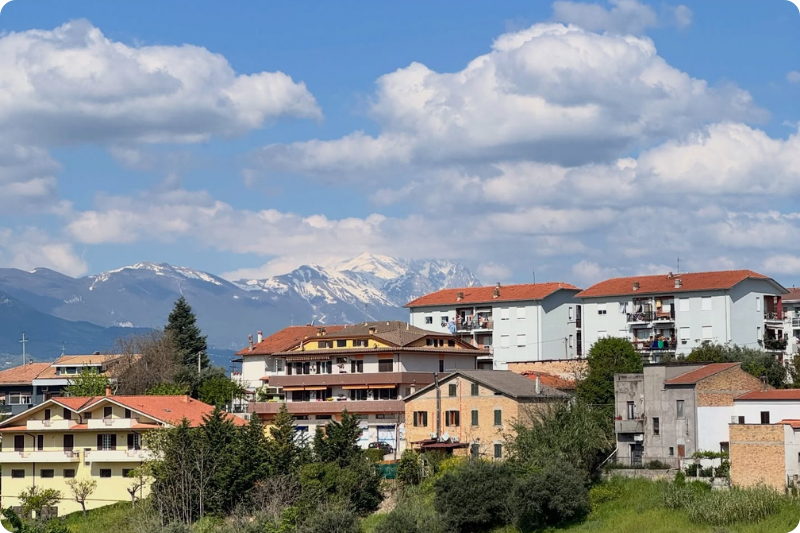
Snow capped mountains in Abruzzo.
A Different Way of Travelling
When we step back from the details, we may find that plans are slightly more flexible. Routes may shift. You might spend longer in one place rather than moving frequently between several. There is often less rushing and more space to settle into where you are.
And in many ways, that creates something better.
The trip becomes less about following a fixed idea of what it should look like, and more about letting it take shape as you go. You notice more. You move more slowly. You experience places in a way that feels more connected, rather than simply passing through them.
Global events will always influence how we travel. That part is unavoidable. They shape the practicalities, the costs, the routes we take to get somewhere.
But they do not have to define the experience itself.
You may arrive in a different way.
You may adjust your plans.
You may travel with a little more awareness than before.
And still, Italy meets you in exactly the same way.
In the light across a square.
In a quiet coffee at the bar.
In the feeling that, even with everything shifting around it, some things remain unchanged.
And often, travelling like this, a little more considered, a little more flexible, only brings you closer to what you were looking for in the first place.
Baci,
Beara x