
(and What to Know Before You Go)
There is a point in spring when Italy begins to soften.
Not all at once, and not in a way that announces itself, but gradually. You notice it first in the landscape. Hills shift back to green, fields begin to fill with wildflowers, and trees start to bloom along quiet roads and across open countryside.
In places like Tuscany and Umbria, it can feel almost luminous. Fresh, open, and full of life again, but without the intensity of summer.
It is one of the most beautiful times to travel here.
I’ve travelled to Italy in almost every season now, except for the height of summer, and spring has always been the one I find myself drawn back to.
My first trip to Tuscany was in April 2024, and it felt like the perfect introduction. Everything was just beginning to open up, without the crowds, without the intensity, just that quiet sense of something starting.
Before You Travel: Understanding Italy’s Rhythm
Spring in Italy does not follow a fixed pattern, and one of the most important things to understand is how the country responds to public holidays.
Because it does respond.
Cities begin to empty as people head towards the coast, the countryside, or back to their hometowns. Trains fill quickly, roads become busier, and smaller towns often feel more alive than the places you might expect.
At the same time, everyday life slows down. Shops close, restaurants may not open, and supermarkets often reduce their hours.
It is not that Italy shuts down.
It simply turns inward.
Key Spring Public Holidays to Be Aware Of
25 April – Liberation Day (Festa della Liberazione)
1 May – Labour Day (Festa dei Lavoratori)
2 June – Republic Day (Festa della Repubblica)
Easter (Pasqua) and Easter Monday (Pasquetta) fall on different dates each year, so always check your dates before travelling.
If you are travelling around these dates, it helps to think a little ahead.
How will you get from the airport?
Where might you eat?
What will be open when you arrive?
It can all feel slightly different to a normal day.
Not difficult. Just worth knowing.
How to Plan Around It (Without Overplanning)
The easiest way to manage this is not to plan everything, but to prepare for the small things.
If you can, pick up a few basics the day before. Bread, fruit, cheese, something simple. It means you are not arriving somewhere new and immediately trying to work out what is open.
You can just arrive, settle in, and let the day unfold.
Supermarkets are usually open in the lead-up to holidays, even if they close on the day itself, so this is often the easiest time to prepare.
When it comes to knowing what is open, it is not always clearly signposted. Google Maps can give an indication, but it is not always up to date around holidays. Instagram is often more reliable, with many restaurants posting their hours there. If you have a host, asking them directly is usually the simplest option.
In smaller towns, especially, it helps to have a few options rather than one fixed plan.
Because things change.
Transport works in a similar way. Trains and buses still run, but often on reduced timetables. If you are travelling on a public holiday, it is worth checking directly with providers like Trenitalia or Italo closer to the time.
Allow a little more time than you think you need. Have a backup option.
And expect the day to move slightly differently.
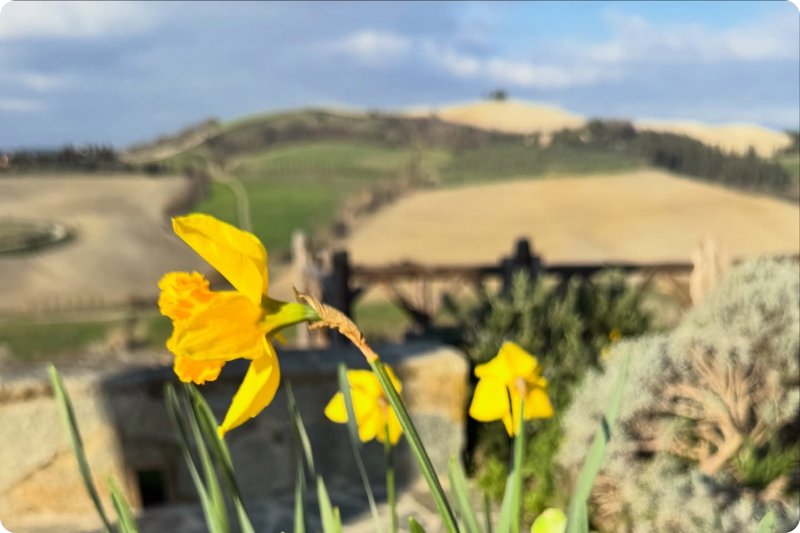
Daffodils in bloom overlooking the rolling Tuscan countryside hills.
The Weather: Changeable, Beautiful, and Cooler at Night
Spring light in Italy is soft and generous. Mornings can be clear, afternoons warm quickly, and then, without much warning, the weather can shift.
Rain arrives. Passes. Leaves everything feeling different again.
It is part of the season.
On that first April trip, I remember starting the day in a light jacket, sitting in the sun by midday, and then reaching for an extra layer again by the evening. It shifts constantly, but in a way that feels easy to move with once you expect it.
So it is less about planning around the weather and more about moving with it.
Checking a local app makes a real difference here. Italians tend to use Il Meteo, which is often more accurate for regional forecasts than international apps. Checking in the morning and again later in the day helps you adjust your plans naturally.
Packing also plays a role in this more than you might expect. Layers are key. Something light for the day, something warmer for the evening, and something waterproof, even if you hope you won’t need it.
I’ve shared more on how I pack for this kind of trip in my blog, Packing Essentials For Italy.
Keeping an Eye on Travel Disruptions
Italy moves well, but not always in the way you expect.
Most of the time, everything runs smoothly. Trains arrive, journeys unfold, and the days carry on without much interruption. But every so often, things shift slightly, and it helps to know where to look when they do.
Strikes, known as scioperi, are part of everyday life in Italy. They can affect trains, buses, and occasionally flights, and while they are usually announced in advance, they are not always easy to find unless you know where to check.
The most reliable places are the transport providers themselves. Trenitalia and Italo will often update their websites with planned disruptions, and local transport companies tend to do the same for regional services. It is also worth checking Italian news sites or even a quick search the day before you travel, just to see if anything has been announced.
It is not something that needs to cause concern.
Just something to be aware of.
Weather can play its part too, particularly after a wet winter. In more rural or mountainous areas, heavy rain can sometimes lead to temporary road closures or slower routes, especially if there has been a landslide or ongoing repair work.
You might find that a route you had planned is no longer the most straightforward option.
And this is where a slightly different mindset helps.
Taking an alternative road, even if it adds time, can lead you through landscapes you would not have otherwise seen. A slower route can turn into something unexpected, a small village, a viewpoint, a place to stop for coffee that was never part of the plan.
If you are driving, it helps to keep an eye on live navigation apps like Google Maps or Waze, which tend to update quickly with closures or changes. And if you are unsure, asking locally is often the simplest way to find the best route forward.
And sometimes, the best thing you can do is pause.
Stay a little longer where you are. Wait for things to clear. Let the day adjust itself slightly.
Because more often than not, it works out.
Just not always in the way you originally expected.
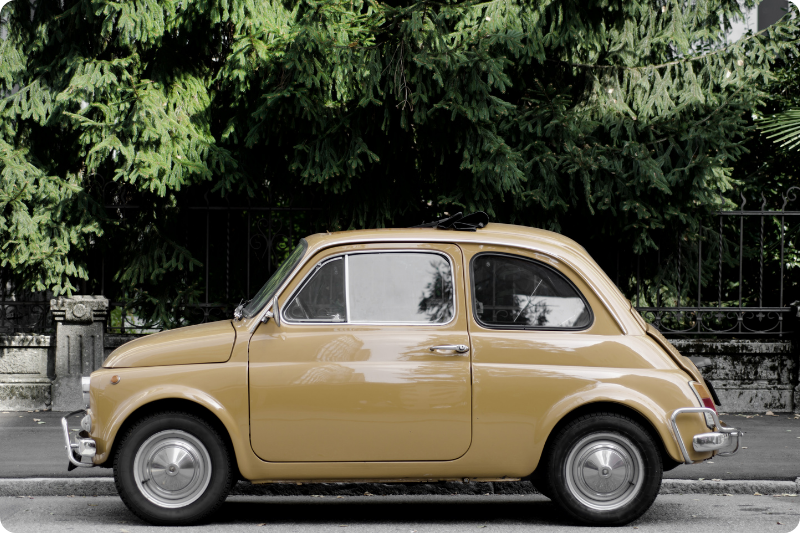
Classic vintage Fiat 500 parked on a quiet Italian street: Image from Freepik.
Where to Go in Spring (and What You’ll Find Along the Way)
Spring doesn’t always announce itself in the way you expect.
It shows up in smaller, more ordinary moments.
A market table filled with fresh produce that wasn’t there a few weeks before. The first outdoor tables quietly filling up in the late morning sun. Window boxes beginning to brighten, daffodils, geraniums, small bursts of colour against old stone.
It’s less about one big change.
More about lots of small ones.
And you begin to notice that each part of Italy holds onto the season slightly differently.
In the south, in regions like Puglia and Sicily, the shift feels earlier, almost effortless. Mornings are already warm enough to sit outside, afternoons that stretch without needing much of a plan, and a sense that life has moved back outdoors without hesitation.
In central Italy, places like Tuscany and Umbria, it’s more gradual. You might still need a jacket in the morning, and then find yourself sitting in the sun by lunchtime, wondering if you packed too much. Days feel like they’re still deciding what they want to be.
Further north, spring can take a little longer to settle. The air stays cooler, the pace steadier, and there’s often a quietness that feels harder to find later in the year.
There isn’t one place that feels “best”.
Just different versions of the same season.
This spring, I’ll be exploring a different part of Italy again, seeing how the season shows up in a new place.
But that contrast is part of what makes travelling here at this time of year so interesting. It never feels exactly the same twice.
And as you move through it, what you eat begins to change, too.
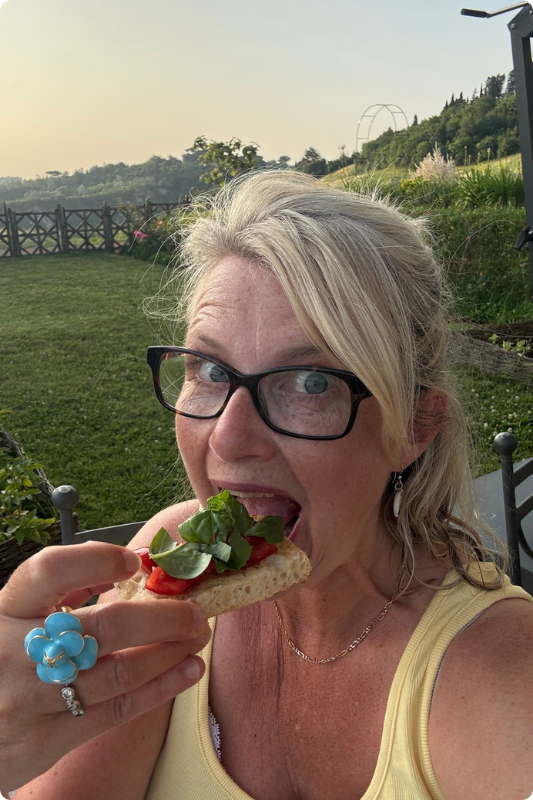
Fresh bruschetta with tomatoes and basil in the Tuscan countryside.
Menus feel lighter. Plates feel simpler. Ingredients start to speak for themselves again.
In Veneto and parts of Tuscany, asparagus begins to appear, often served without much fuss, just fresh, seasonal, and exactly what it needs to be.
Around Rome and across Lazio, artichokes come into their own. You might find them slow-cooked with herbs, or crisp and golden, something humble, but done beautifully.
In central regions, peas and broad beans start to show up alongside pecorino. Small dishes, but very much tied to the time of year.
And further south, as the weeks move on, strawberries begin to arrive. Sweet, soft, and completely different to anything out of season.
It’s not something you need to plan for.
Just something you start to notice.
And once you do, it becomes part of how you choose where to stop, where to sit, what to order.
Let Your Plans Stay Flexible
If you’re travelling by car, this is often where spring reveals itself most clearly.
Routes don’t always go exactly to plan. A delay here, a slower road there, sometimes something you didn’t expect.
But those small shifts often lead somewhere better.
A quieter road.
A place you hadn’t planned to stop.
A lunch that wasn’t part of the itinerary.
And more often than not, those are the moments you remember.
It’s part of why I keep coming back at this time of year. It never feels rushed, never feels fixed, and always feels like there’s something just slightly different waiting around the next corner.
I’ll be sharing more from this spring’s trip when I’m back, but for now, this is the season as I’ve come to know it.
Baci,
Beara x